
The French gluten-free market has shifted. Only 10% of gluten-free product buyers do so for medical reasons: the remaining 90% are motivated by digestive comfort and well-being. This ratio reshapes the ranges, formulations, and quality requirements across the entire supply chain.
Gluten-free flour formulation: changing technical blends
Single-flour blends (white rice or corn) are declining in favor of multi-grain blends designed to replicate the rheological properties of wheat. Whole grain rice flour combined with tapioca starch and potato starch now forms the most common base in gluten-free artisanal baking.
The addition of blond psyllium or xanthan gum remains the main lever to compensate for the absence of a gluten network. We observe a clear trend towards plant-based hydrocolloids (flax seeds, chia) that are gradually replacing industrial gums, with a double argument: clean label and superior digestive tolerance.
Legume flours (chickpeas, coral lentils) are gaining ground in gluten-free bread and pasta recipes. Their appeal lies in their protein content, which is often lacking in traditional gluten-free products based on rice.
A blend of rice flour/chickpea flour in equal parts offers a more balanced nutritional profile than a 100% rice formulation, without compromising texture. Following the news on Gourmand Sans Gluten allows for quick identification of these formulation changes over product launches.
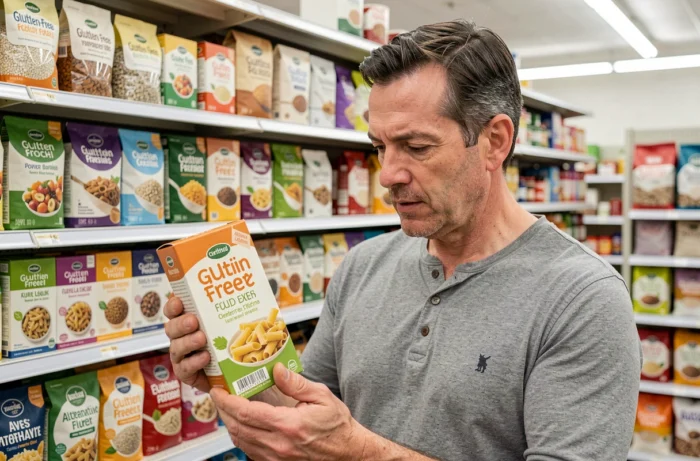
Gluten-free allergen labeling: the ongoing European revision
Regulation (EU) No 1169/2011 (INCO) requires the declaration of 14 major allergens, including gluten-containing cereals: wheat, rye, barley, oats, spelt, kamut. The European Commission is working on a revision of this labeling with two priority axes.
- Harmonization of triggering thresholds for mentions like “traces of gluten,” which are currently left to the discretion of manufacturers without a unified quantitative framework at the EU level
- Clarification of the distinction between “gluten-free” (regulatory threshold of 20 mg/kg) and “very low gluten content” (between 20 and 100 mg/kg), two mentions that remain a source of confusion for consumers and restaurateurs
- Adaptation of the allergen list to new raw materials used in reformulation, particularly certified gluten-free oats, whose status varies by member country
For professionals in the food service and agri-food sectors, this revision implies an update of supplier specifications and technical data sheets. We recommend anticipating now by requiring your suppliers to provide analysis certificates with detection thresholds expressed in mg/kg.
Gluten-free snacking and pastry: the premium segment driving growth
The shift towards a “wellness” usage has created a segment that medical ranges did not cover: gluten-free pleasure snacking. Cookies, financiers, brownies, and cereal bars represent the most visible growth driver in organic and conventional shelves.
The technical difficulty remains the same: achieving lasting softness without the gluten network. Manufacturers that stand out are working on low-temperature baking processes and incorporating fruit purees (banana, apple sauce) as natural binding and moisturizing agents.
The segment of gluten-free pasta made from legumes (coral lentils, chickpeas) is also progressing strongly, driven by the cross-demand for gluten-free/plant protein-rich products. The convergence between gluten-free diets and plant-based eating constitutes a major development axis for brands reformulating their ranges.

Everyday gluten-free cooking: ingredients to watch
Cross-contamination remains the weak point of gluten-free diets outside of certified products. Beyond the obvious cereals, several common ingredients contain gluten without their labeling explicitly indicating it.
- Classic soy sauce, brewed with wheat, represents a frequent source of hidden gluten in everyday cooking. Tamari versions without wheat are the direct alternative
- Industrial bouillon cubes and sauce bases regularly incorporate wheat starch as a thickener
- Mixed spices and ready-to-use seasonings may contain gluten-based anti-caking agents, rarely highlighted on the packaging
Reading the ingredient list systematically is not enough when mentions of “possible traces” are not regulated. For people with celiac disease, only the crossed wheat ear logo (issued by AFDIAG in France) guarantees a product controlled below the threshold of 20 mg/kg.
Gluten-free oats: a special case
Oats do not contain gluten in the strict sense, but a related protein, avenin, which is tolerated by the majority of celiacs. The problem arises from contamination in the field and during storage. Only oats grown and processed on dedicated supply chains deserve the “gluten-free” label. We recommend checking the certification on the packaging rather than relying solely on the absence of wheat in the ingredient list.
The French gluten-free sector is structured around two parallel dynamics: an increasing regulatory requirement on labeling and a consumer demand that far exceeds the medical framework. Brands and artisans who master their formulations, document their contamination thresholds, and invest in the pleasure segment are taking a lead in a market where analytical transparency is becoming both a commercial argument and a health obligation.