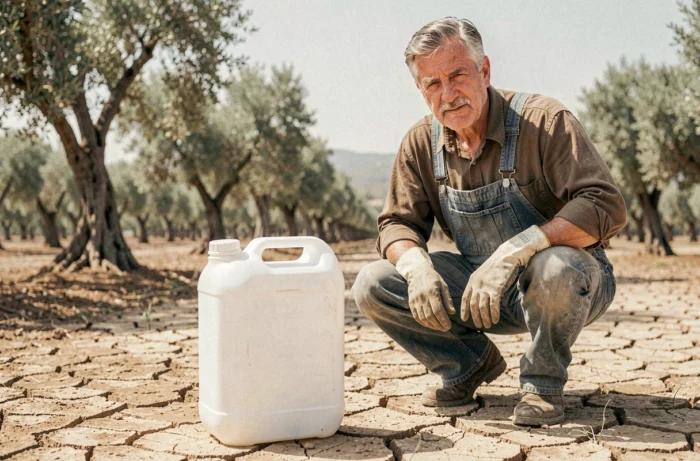
You live in the south of France, and a Spanish agricultural cooperative is less than two hours’ drive away. The 5-liter canister of glyphosate is on the shelf, accessible, at a significantly lower price than a herbicide authorized in France. However, several legal and practical obstacles separate the checkout from the return home.
European Regulation: A More Monitored Framework Than Before
The authorization of glyphosate has been extended until December 2033. Since then, the European framework has been clarified with technical corrections published in the Official Journal of the EU, which strengthen the requirements on commercial formulations.
These adjustments require manufacturers and professional users to recheck the compliance of their national authorizations. The 5-liter canisters sold in Spain to professionals are therefore subject to a stricter framework than in 2023, with an increased focus on impurities present in formulations. If considering the purchase of glyphosate 5 liters in Spain, this regulatory tightening should be taken into account before any decision.
In other words, the product remains legal in Spain, but European monitoring of formulations has intensified, which diminishes the idea of a completely free Spanish market.
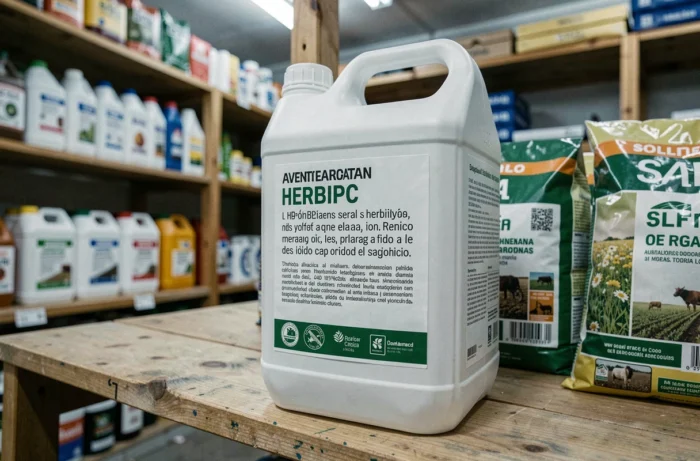
Glyphosate Banned in France for Individuals: What You Risk on Your Return
Since 2019, the sale of glyphosate to individuals has been banned in France. Buying a canister in Spain and bringing it back constitutes the importation of a phytosanitary product not authorized on French territory.
Border controls remain infrequent between France and Spain, which gives a false impression of tolerance.
Sanctions Provided by French Law
The Rural Code strictly regulates the importation of unapproved phytosanitary products. The theoretical penalties are severe:
- Systematic confiscation of the product in case of control, whether the canister is opened or sealed.
- A fine that can reach several thousand euros for significant volumes, and several hundred euros for a single canister.
- In case of recidivism or large volumes, criminal prosecution with the risk of imprisonment.
The fact that controls are rare does not change the legal qualification. Transporting glyphosate from Spain to France remains an offense, even for strictly personal use in one’s garden.
Spain: Free Purchase Does Not Mean Purchase Without Conditions
Spain allows the sale of glyphosate, but the framework is not as simple as buying potting soil at a garden center.
Glyphosate is available in agricultural cooperatives, some DIY stores, and garden centers. However, packaging limits apply to individuals: ready-to-use products are capped at 1 liter, and concentrates at 500 ml or 500 g.
What the Spanish Framework Imposes
For a passing French buyer, the product purchased in Spain complies with Spanish law, not French law. National approval differs from country to country, even within the European Union. A canister perfectly legal in Figueras becomes a prohibited product as soon as it crosses the border.
Alternatives to Glyphosate: Legal Weeding Solutions in France
Giving up glyphosate does not mean giving up weeding. Several methods are authorized for individuals in France and yield results on unwanted weeds, provided the technique is adapted to the soil and the area to be treated.
- Thermal weeding (flame or steam) destroys plants by heat shock. Effective on paths and terraces, it requires several passes per season.
- Pelargonic acid, a plant-based active substance, acts by contact on the weeds. Its effect is rapid but non-systemic: it does not destroy deep roots.
- Organic mulching (wood chips, straw, bark) limits the growth of weeds by depriving the soil of light. It is the most sustainable method for flower beds and vegetable gardens.
- Mechanical weeding (hoe, cultivator) remains the simplest technique for small areas. It uses neither water nor products.
None of these alternatives offer the systemic efficiency of glyphosate, which acts down to the roots of the plant. But they allow for regular garden maintenance without legal risk or exposure to controversial substances.
Pelargonic Acid Authorized in Spain from October 2026
A natural herbicide based on pelargonic acid has been authorized in Spain starting from October 2026. This product offers an intermediate treatment option between manual weeding and the use of glyphosate. Its adoption by Spanish farmers could, in the long term, reduce the demand for glyphosate in local cooperatives.
The savings made on a 5-liter canister bought on the other side of the border do not cover the amount of a fine, nor the cost of a confiscated and destroyed product. The price differential between Spanish glyphosate and an herbicide authorized in France quickly diminishes when factoring in the trip, the risk of control, and the lack of guarantee on the formulation.