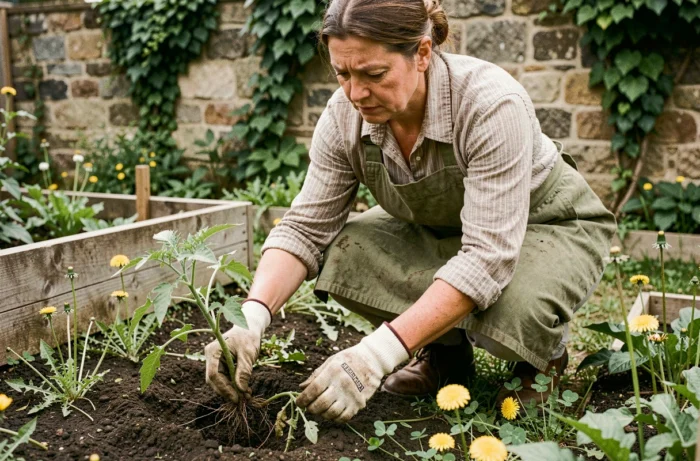
Fighting against weeds in a garden is no longer just about choosing between manual removal and herbicides. Since July 1, 2022, a decree prohibits the use of synthetic plant protection products in all private properties for residential use, even when a professional is involved. This regulatory constraint redefines the available methods and requires a comparison of their actual effectiveness in the field.
Weeding Regulations in the Garden: What Has Changed Since 2022
Most gardening guides mention the ban on glyphosate for individuals without specifying the legal mechanism. The decree of January 15, 2021, which came into effect on July 1, 2022, does not target the user’s status but the location of the product application. A landscaper treating your private garden is subject to the same prohibition as an individual.
Three categories of products remain authorized: biocontrol products, low-risk products, and those usable in organic farming. Everything else is prohibited in ornamental gardens, vegetable gardens, and around houses. From January 1, 2025, this ban will also extend to large play areas and grass tennis courts.
Sanctions are no longer theoretical. Administrative fines are now applied in practice, making the subject less anecdotal than it seems. Before choosing a weeding method, checking the compliance of the product used avoids costly setbacks. You can find the tips from the Les Défricheurs website that detail methods compliant with this regulation.
Comparison of Natural Weeding Methods: Effectiveness and Constraints
Not all alternatives to chemical weeding are equal. Their effectiveness depends on the type of targeted weeds, the area to be treated, and the time available. The table below summarizes the main methods authorized in private gardens.
| Method | Effectiveness on Perennials | Duration of Effect | Main Constraint |
|---|---|---|---|
| Manual Removal | High (if entire root is extracted) | Variable, regrowth possible | Time and physical effort |
| Organic Mulching | Preventive, low on established plants | Several months | Regular renewal |
| Thermal Weeding | Good on annuals, limited on perennials | Few weeks | Repeated passes necessary |
| Boiling Water | Medium | Short | Risk of burning neighboring plants |
| White Vinegar | Low (foliar action only) | Very short | Acidifies the soil, non-selective |
The Case of White Vinegar: A False Ally for the Gardener
Concentrated white vinegar is often presented as a miracle herbicide. In reality, it only destroys the aerial part of the weeds without reaching the roots. Perennials like couch grass or bindweed regrow in a few days.
A market gardener has publicly warned against the repeated use of white vinegar: acetic acid cumulatively acidifies the soil and disrupts microbial life. In a vegetable garden, this acidification can compromise the growth of crops sensitive to pH.
Thermal Weeding: Effective Under Conditions
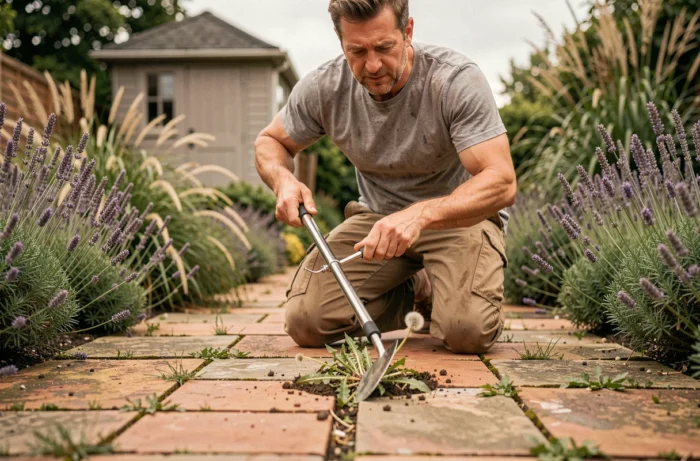
Passing a flame or steam over the weeds causes a thermal shock that bursts the plant cells. For annuals (chickweed, starwort), a single pass is sufficient. For rhizomatous perennials, three to five passes spaced ten days apart are needed to deplete the root reserves.
This method works well for paths, terraces, and mineral surfaces. However, it is poorly suited for dense flower beds where the risk of burning cultivated plants is real.
Mulching and Ground Cover Plants: Prevention That Reduces Weeding
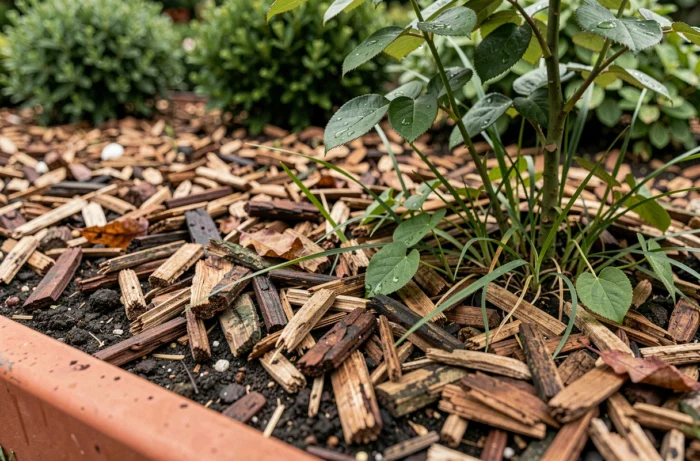
No curative method matches prevention in terms of time/effectiveness ratio. Organic mulching (wood chips, straw, dead leaves) deprives weed seeds of light and limits their germination.
- A sufficiently thick layer of mulch (at least the width of a hand) blocks most annuals and significantly slows down perennials
- Ground cover plants (creeping ivy, periwinkle, creeping thyme) occupy space and prevent weeds from establishing themselves permanently between crops
- A bare soil is a colonized soil: covering every square inch of unoccupied space remains the most effective preventive action
Mineral mulching (gravel, pumice) also works but does not enrich the soil. It is better suited for paths and hedge bases than for vegetable gardens, where organic matter nourishes the soil as it decomposes.
Weeds in the Vegetable Garden: Adapting the Strategy to the Crop Cycle
In the vegetable garden, weeding does not follow the same logic as in ornamental beds. Crops occupy the soil for defined periods, and weeds exploit every interval between two plantings.
False seeding is a technique underused by amateur gardeners. It involves preparing the soil as for seeding, waiting for the weeds to emerge, and then destroying them with light raking before sowing the desired crop. This additional pass significantly reduces weed pressure during the first weeks of growth.
Between rows of vegetables, a mulch of dried grass clippings or straw limits water competition. Weeds that do emerge are easier to pull in mulched soil, as the earth remains loose on the surface.
- Before sowing: practice false seeding to reduce the seed bank on the surface
- During the crop: mulch the inter-rows as soon as the plants reach a sufficient size
- After harvest: sow a green manure (mustard, phacelia) to occupy the soil and prevent recolonization by weeds
The combination of false seeding, mulching, and green manure constitutes a coherent cycle that gradually decreases the weed seed bank in the soil. Each well-covered growing season reduces the weeding work for the next one.
Choosing a single method is not enough to sustainably control unwanted weeds in a garden. It is the combination of preventive actions and curative techniques adapted to the type of surface that produces visible results from year to year, within the legal framework in effect since 2022.