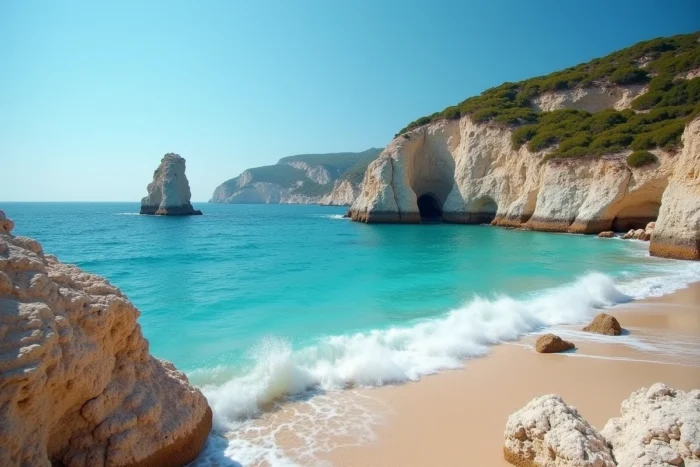
The 3 Pointes beach, on the Capo Pertusato trail in Bonifacio, does not appear in any rankings of sandy beaches in Southern Corsica. The term “beach” is actually misleading: it is an area of limestone rocks where three capes plunge directly into the sea. It’s good to know this before putting on your sneakers.
3 Pointes Beach in Bonifacio: limestone rocks, not sand
Tourist guides and lists of the “most beautiful beaches in Bonifacio” create confusion. The name suggests sand, a gently sloping bathing area, a space to lay down your towel. The terrain on site contradicts each of these expectations.
The hiking guide Paradisu states that this beach is not made of sand or gravel but of limestone rocks. The three rocky outcrops plunge into crystal-clear water, with visible depths from the shore. The scenery is spectacular, but settling on the ground requires a minimum of adaptation.
Those looking for reviews of the 3 Pointes beach in Bonifacio often find the term “wild.” The word is accurate: no beach bar, no shower, no trash can. The site remains raw, which is both its main appeal and its limitation for families used to developed beaches like Rondinara or Piantarella.
Access to the Three Pointes: the last stretch poses a real safety issue
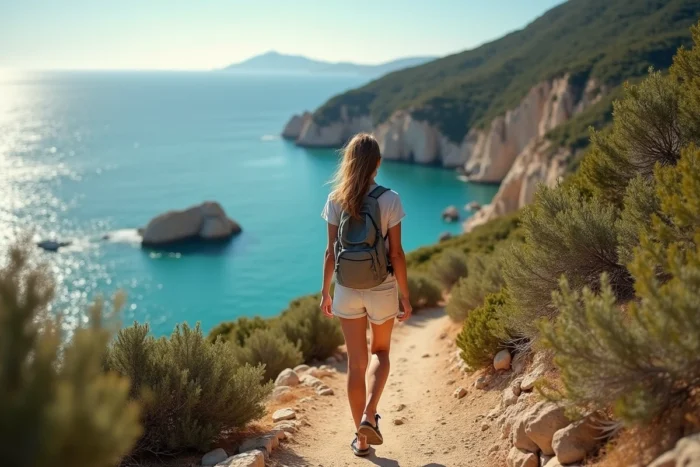
The hike to Capo Pertusato from Bonifacio is well-marked and relatively accessible for most of the route. The panorama of the white cliffs and Sardinia rewards the effort. The problem lies in the last segment, which descends towards the Three Pointes themselves.
The guide Komoot specifies that the last stretch involves a slight climb and is not suitable for young children or those who are unsure of their footing. Most content that ranks the site among the “must-sees” of Bonifacio overlooks this point.
What the descent entails on the ground
- The trail loses its clear markings in the last few meters, with passages over bare rock where hands must be used
- Beach shoes like flip-flops are to be avoided: the limestone rocks have sharp edges and slippery surfaces in dry weather
- No shade or safe area in case of discomfort on the last stretch, complicating any potential rescue intervention
Field reports vary on the actual difficulty: some regular hikers consider the descent a fun passage, while others deem it exposed. The level of risk largely depends on experience in rocky terrain and the weather conditions of the day.
Bonifacio Cliffs and swimming at the Three Pointes: what the water hides
The water at the Three Pointes is remarkably clear, with turquoise shades that aerial photos have made famous on social media. Entry is from the rocks, with no gently sloping beach for a gradual entrance.
Two parameters change the experience compared to a classic beach in Southern Corsica:
The depth increases quickly. In just a few meters, you go from exposed rocks to depths of several meters. For occasional swimmers, this abrupt transition can be surprising. The lack of shallow areas excludes non-swimmers from bathing.
The current between the rocky points varies depending on wind conditions. The site is located in the Bonifacio Strait Nature Reserve, a strait known for its winds and currents. On days with moderate west winds, the sea remains navigable between the capes. In strong winds, the swells between the rocks make getting out of the water tricky.
No supervision or safety equipment
Unlike monitored beaches in season like Stagnolu or Tonnara, the Three Pointes have no lifeguard station. The phone network is unreliable in this section of the coastal path. In case of a problem in the water, the response time is considerably longer than on a beach accessible by car.
Wild beach of Bonifacio: who this hike is worth it for
The Three Pointes do not cater to the same audience as the sandy beaches accessible by car around Bonifacio. The site naturally selects its visitors by the difficulty of access and the total absence of facilities.
The typical profile corresponds to hikers comfortable in rocky terrain, seeking an isolated swimming spot with an exceptional visual setting overlooking the cliffs. Photographers and snorkeling enthusiasts also find their satisfaction, as the rocky bottoms are conducive to observation.
In contrast, families with young children, people with reduced mobility, and occasional bathers would do well to favor Paragan or Petit Sperone, which offer easier access and equally beautiful surroundings, albeit less isolated.
- Wear closed shoes with a non-slip sole for the descent and walking on the limestone rocks
- Bring enough water: no supply point between the Pertusato lighthouse parking and the Three Pointes
- Prefer an early morning departure to avoid the heat on the exposed trail and enjoy the site before the arrival of other hikers
The site’s value comes from what it does not offer: no nearby parking, no beach bar, no music. The coastline has remained intact just a few kilometers from the citadel of Bonifacio, and this proximity to the city makes the contrast all the more striking, provided you accept the constraints that come with the wild character of the place.