Leisure activities in France are no longer limited to choosing between a pottery workshop and a Sunday hike. Offers are segmenting, formats are shortening, and participants’ expectations are shifting towards hybrid experiences that blend technology, proximity, and physical engagement. This year, we are observing structural changes in the way leisure activities are designed, distributed, and consumed.
Hybrid immersive leisure: augmented reality and outdoor trails merge
The immersive leisure segment is no longer confined to escape game rooms in city centers. Outdoor trails now incorporate layers of augmented reality superimposed on natural or heritage environments. The principle: a smartphone or lightweight headset transforms a walk in the woods, a visit to a historical site, or an urban circuit into an interactive scenario.
What distinguishes these offers from traditional mobile games is the physical anchoring. Participants must move, solve localized puzzles, and interact with real elements. The micro-themed parks and “immersive cities” emerging in Île-de-France and several metropolitan areas combine role-playing, interactive technologies, and local heritage.
For operators, the advantage is twofold: reduced infrastructure costs compared to a traditional theme park, and the ability to renew scenarios through simple software updates. For participants, the experience lies halfway between gentle sports activities and life-sized video games. We recommend checking the required equipment level before booking: some trails provide the gear, while others assume a recent smartphone with compatible AR sensors.
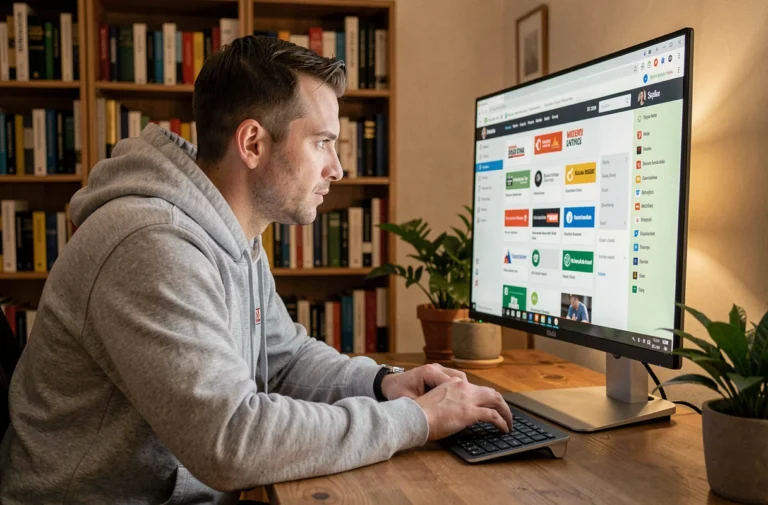
Those wishing to visit Oka Mag for leisure will find a regularly updated overview of these new experiences, categorized by region and budget.
Urban micro-adventures: short activities replacing long trips
The trend for structured urban micro-adventures is gaining notable momentum. The typical format: a thirty to sixty-minute experience, accessible without long transport, often bookable on the same day. Exploring unknown neighborhoods in a scavenger hunt style, themed night guided tours, urban sports challenges.
This shift can be explained by several converging factors. The vacation budget remains constrained for a significant portion of households. Available time is fragmented. And the demand for novelty does not wane, prompting providers to offer short formats at reasonable prices, often within an hour’s transport from home.
What characterizes a successful micro-adventure
- A strong local anchoring: discovering a place or heritage that the participant would not have explored alone, even in their own city
- An active dimension: walking, running, cycling, urban climbing, not just a passive visit with an audio guide
- A bookable format per unit, without subscription or commitment, with a limited capacity that ensures quality supervision
Paris has a dense offering, but cities like Lyon, Bordeaux, Nantes, or Marseille are developing their own circuits. The upgrade comes through scripting: instead of a simple marked trail, some operators integrate characters, puzzles, or timed challenges.
Active ecotourism and educational workshops in France
Active ecotourism is not to be confused with traditional green tourism. The difference lies in the educational structuring of the experience. Agro-ecological domains, immersive gardens, and participatory farms offer workshops where visitors do not just observe: they plant, harvest, transform, and leave with transferable skills.
This segment attracts an adult audience seeking meaning, as well as families looking for activities that are both physical and educational. The offering ranges from a weekend permaculture course to a half-day guided foraging session with a botanist.
Criteria for evaluating the quality of an educational workshop
The presence of a trained facilitator (agronomist, naturalist, certified nature guide) makes the difference between commercial animation and a genuine awareness experience. We recommend checking the facilitator-to-participant ratio: beyond a dozen people per group, the educational interaction significantly dilutes.
Prices vary according to duration and level of supervision, but the value-for-money ratio often remains favorable compared to more standardized leisure activities. Some domains offer packages that include a meal prepared with the harvested products, extending the experience without artificially inflating the bill.
Thrilling activities: formats on the rise in 2026
The thrill-seeking market is renewing itself through formats rather than disciplines. Bungee jumping and skydiving remain classics, but multi-activity courses in a single session are gaining ground. The principle: chaining zip-lining, via ferrata, white-water swimming, and rappelling at the same site, with a single price and continuous supervision.
This “experience pack” logic responds to a demand for density. Participants want to maximize intensity in a short time slot, often half a day. Operators find a higher profitability lever in selling bundled activities rather than isolated ones.
- Check the certifications of the supervision (state diploma, federal qualification) before any booking
- Prefer sites that clearly display their cancellation conditions and weight or age limits
- Compare offers on specialized platforms rather than general marketplaces, where quality filtering is less rigorous
Mountain regions (Alps, Pyrenees, Massif Central) logically concentrate the densest offerings, but coastal or river sites are developing courses suitable for less sporty profiles.
Choosing a leisure activity in 2026 depends less on the discipline itself than on the format, duration, and level of supervision. Informed participants weigh proximity, intensity, and educational value. Testing a short format before committing to a full day remains the most reliable strategy to avoid disappointments.