
Home insurance is not limited to the standard multi-risk contract that most tenants subscribe to by reflex. Behind this generic term coexist several distinct contractual mechanisms, each responding to a specific legal status (tenant, owner-occupier, non-occupying owner in co-ownership). Understanding their interactions avoids coverage overlaps and gaps in guarantees.
Non-occupying owner insurance: the little-known obligation from the ALUR law
Since the ALUR law of 2014, every co-ownership owner must take out liability insurance covering at least the damages caused to common areas, other co-owners, and third parties. This obligation applies to both owner-occupiers and landlords.
The non-occupying owner (PNO) contract does not duplicate the tenant’s insurance. It covers the landlord’s liability for damages related to the building itself: construction defects, lack of maintenance of private areas, damages occurring during a rental vacancy. Without a PNO contract, a landlord in co-ownership exposes themselves to direct claims from the property manager or neighbors, without any indemnity safety net.
We recommend checking that the PNO contract includes the tenant’s recourse guarantee. In the event of a claim related to a structural defect, it is this clause that covers the damages suffered by the tenant on their personal belongings, preventing the landlord from bearing the repair costs alone.
Climate-related claims and rising home insurance premiums: a direct cause-and-effect link
To effectively compare market offers, it is useful to consult the insurance options offered by Immo Prima before renewing an existing contract.

The increase in episodes of drought, flooding, and hail directly impacts the pricing of home insurance contracts. Insurers pass on the rising costs of climate-related claims to annual premiums, and this upward trend has accelerated in recent years.
The mechanism is simple: the natural disaster regime (CatNat) includes a legal surcharge integrated into each multi-risk home insurance contract. When natural disaster decrees multiply, reinsurers raise their rates, which cascades down to the final premium.
For a landlord managing multiple properties, managing this risk involves two levers:
- Raising deductibles on the least critical guarantees (glass breakage, theft of outdoor furniture) to contain the overall premium without sacrificing structural coverage.
- Favoring contracts that clearly distinguish the CatNat deductible from the contractual deductible, to anticipate the actual remaining charge in the event of a climate-related claim.
- Re-evaluating the declared value of furniture and the building each year, as overvaluation inflates the premium without improving actual compensation (indemnity principle).
Tenant contract and liability insurance: the real scope of coverage
The tenant is legally required to take out insurance covering at least the rental risks: fire, water damage, and explosion. This obligation stems from Article 7 of the law of July 6, 1989. The landlord can terminate the lease if the tenant does not provide proof of insurance.
The frequent confusion concerns the scope of liability insurance. The standard multi-risk home insurance contract includes two distinct components:
- Tenant liability, which covers damages caused to the housing itself (the owner’s building).
- Private life liability, which covers damages caused to third parties outside the housing (neighbors, passersby, visitors).
- Property guarantee, which compensates the tenant for their personal belongings in the event of a covered claim.
A contract that only mentions rental risks without private life liability leaves the tenant exposed to neighborhood claims, particularly in the event of water damage affecting the floors.
False declaration at subscription: contractual consequences and insurer recourse
The insurance code provides for graduated sanctions in the event of a false declaration during subscription. An inaccurate declaration made in good faith results in a proportional reduction of the indemnity, calculated according to the ratio between the premium paid and the premium that would have been due if the risk had been correctly declared.
In the case of proven bad faith, the contract is deemed null and void. The insurer may refuse any indemnity, including for claims unrelated to the false information. We observe that the most frequently inaccurate declarations concern the living area, the presence of an open fireplace, or the exercise of a professional activity at home.
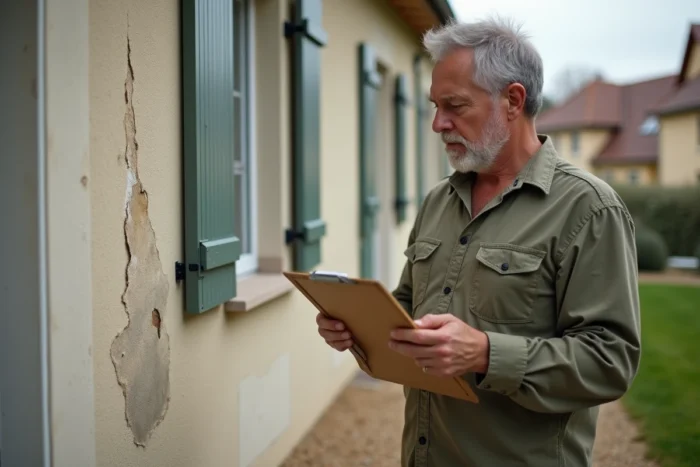
The risk is not limited to the refusal of indemnification. The insurer may also demand the reimbursement of indemnities already paid on previous claims if the false declaration is discovered later. For a landlord, the nullity of the PNO contract can result in personal liability for all damages covered during the disputed period.
Termination and portability of home insurance contracts: what has changed
Since the Hamon law, any insured person can terminate their home insurance contract at any time after the first year, without fees or penalties. The new insurer handles the termination formalities with the old one.
This right to infra-annual termination has changed the management of contracts for landlords with multiple properties. Changing insurers during the year allows for a quick response to a perceived disproportionate premium increase, without waiting for the anniversary date.
For tenants, termination is also possible in the case of moving, changing marital status, or retiring. The contract ends one month after notification to the insurer, and the unused portion of the premium is refunded.
Portability remains an underestimated issue. No legal mechanism guarantees the automatic transfer of claims history from one insurer to another. A tenant or owner who frequently changes contracts loses traceability of their bonus, which can affect the rate offered by the new insurer.